


On 4 November 2026, the International Bureau for Epilepsy will bring together people with epilepsy, patient organisations, policymakers, clinicians, researchers and other stakeholders in Brussels for the European Epilepsy Summit 2026 — a day focused on measuring progress, identifying gaps and turning evidence into action.
Across Europe, important commitments have been made to improve the lives of people with epilepsy. The WHO Intersectoral Global Action Plan on Epilepsy and Other Neurological Disorders 2022–2031 (IGAP) has provided a global framework for action. But commitments alone are not enough.
The question now is how far those commitments are being translated into meaningful change in policy, services, treatment, support and everyday life.
That is the starting point for the European Epilepsy Summit 2026: Measuring Progress. Driving Action.
Measuring progress across Europe
A central moment of the Summit will be the official launch of the European Epilepsy Barometer 2026.
Developed by IBE Europe, the Barometer provides a structured assessment of epilepsy care, support and the policy environment across European countries. Its purpose is not simply to compare countries or produce a set of scores. It is designed to help identify patterns, gaps and opportunities for improvement — and to understand what may be enabling or hindering progress.
The Barometer examines five areas that together provide a broader picture of how epilepsy is being addressed:
– Epilepsy Awareness
– Care Pathways
– Access to Treatment
– System Capacity
– Policy Prioritisation
These pillars allow the discussion to move beyond whether a service, policy or initiative exists towards more important questions: Is it structured? Is it accessible? Is it equitable? Is it adequately supported? And is it making a difference to people with epilepsy?
Connecting evidence with lived experience
Data can show us where differences and gaps exist. Understanding what those differences mean requires listening to the people experiencing them.
The Summit will therefore also draw on evidence from the Global Epilepsy Needs Study (GENS), which explored the experiences and needs of people affected by epilepsy across countries and health systems.
A dedicated session will consider what the GENS findings can teach us about IGAP implementation in Europe, followed by perspectives from GENS focus countries and people with lived experience.
Bringing these different forms of evidence together is important. System-level indicators can tell us something about the structures around epilepsy care. Lived experience helps us understand how those structures are experienced in practice — where people encounter barriers, where services work well and where policy commitments have yet to translate into meaningful change.
From awareness to access, care and policy
The Summit programme will use the five Barometer pillars as a framework for deeper discussion.
Sessions will examine questions including:
How do we move beyond awareness activity towards sustained change?
Public campaigns and awareness days can increase visibility, but lasting progress requires more: better public understanding, stronger participation by people with epilepsy, appropriate education and support, and greater responsibility across governments, health systems and civil society.
How can Europe improve access to treatment?
Innovation in epilepsy treatment does not automatically mean equitable access. The Summit will consider the barriers that can affect availability, reimbursement and access across different health systems.
What makes an effective care pathway?
Good practice in individual centres is important, but people with epilepsy also need coordinated, consistent and equitable pathways through diagnosis, treatment, specialist care and longer-term support.
Do health systems have the capacity to deliver what people need?
Workforce, specialist expertise, services and infrastructure all affect whether policy commitments can be implemented in practice.
How do we make epilepsy a stronger policy priority?
Progress ultimately depends on epilepsy being recognised within national and European health priorities, with the political commitment and investment needed to support implementation.
Throughout the day, these discussions will focus not only on identifying problems, but on what can realistically be done to address them.
Bringing different perspectives together
The Summit will bring together voices from across the epilepsy, neurology and health-policy communities.
Contributors include representatives from the World Health Organization, European Parliament, European Commission, European Patients’ Forum, European Brain Council, International League Against Epilepsy, national epilepsy organisations, clinical and research communities, industry and people with lived experience.
This breadth of participation matters because no single organisation or sector can deliver the change required.
Improving epilepsy care will require collaboration between governments, healthcare systems, professionals, researchers, patient organisations, people with epilepsy, European institutions and other partners.
Bringing lived experience into the conversations that shape epilepsy care
The Summit will bring together voices from across the epilepsy, neurology and health-policy communities.
Contributors include representatives from the World Health Organization, European Parliament, European Commission, European Patients’ Forum, European Brain Council, International League Against Epilepsy, national epilepsy organisations, clinical and research communities, industry and people with lived experience.
This breadth of participation matters because no single organisation or sector can deliver the change required.
Improving epilepsy care will require collaboration between governments, healthcare systems, professionals, researchers, patient organisations, people with epilepsy, European institutions and other partners.
Three days of European epilepsy advocacy
The Summit is also not an isolated event.
It sits at the centre of three days of European epilepsy advocacy in Brussels from 3–5 November.
Activities will include the European Chapter Convention and Corporate Council on 3 November, the European Epilepsy Summit on 4 November, and political engagement at the European Parliament on 5 November.
Together, these activities form part of a wider journey:
Evidence → Priorities → Advocacy → Policy → Implementation
The aim is to create a clearer pathway from European-level evidence and dialogue to national advocacy and practical implementation.
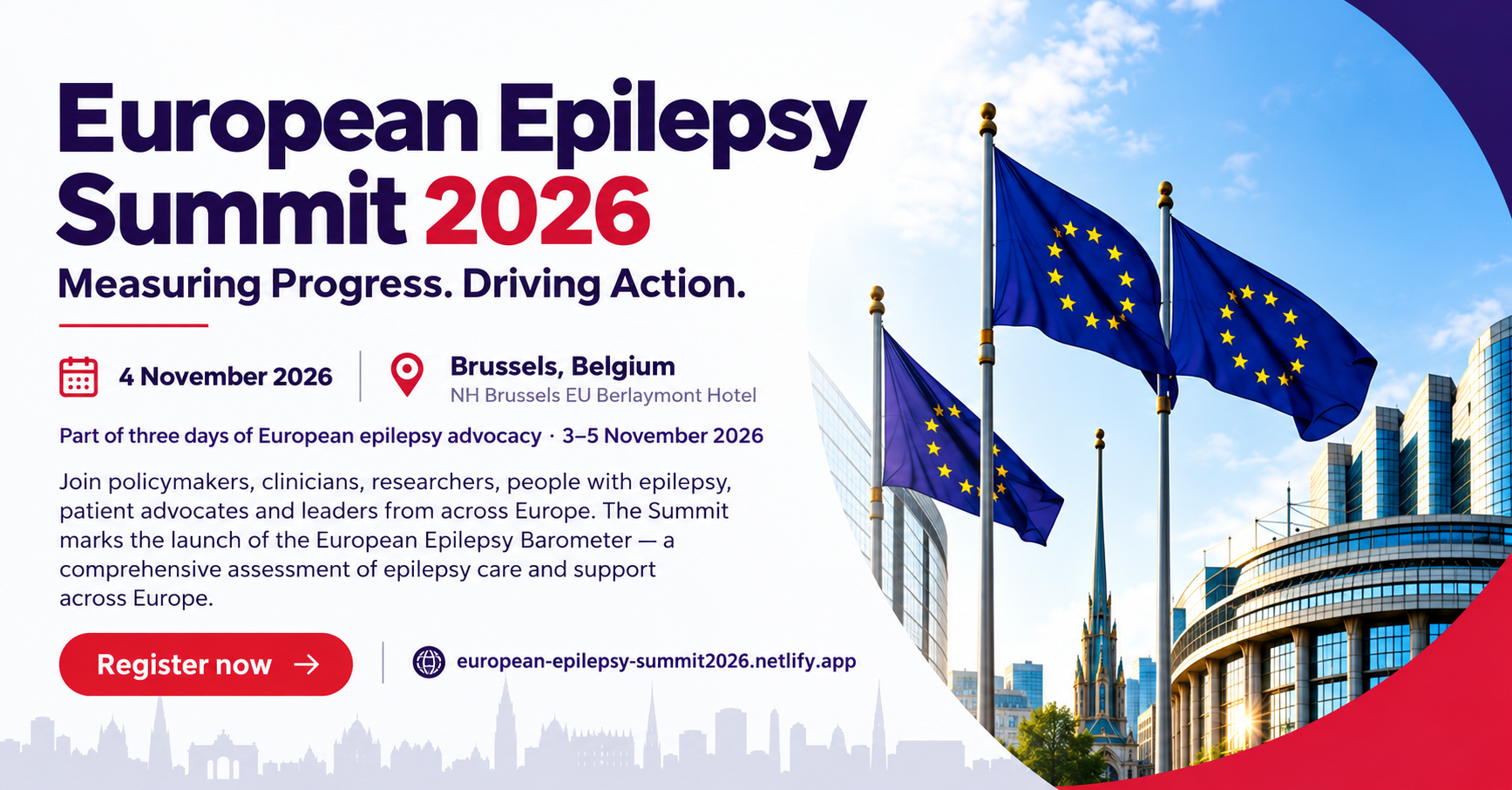
European Epilepsy Summit 2026
Measuring Progress. Driving Action.
4 November 2026
NH Brussels EU Berlaymont Hotel, Brussels, Belgium
Part of three days of European epilepsy advocacy, 3–5 November 2026.
Registration is now open.
Visit the European Epilepsy Summit 2026 microsite to learn more about the programme, speakers, European Epilepsy Barometer and the wider three-day advocacy programme: